Business Rules Management
Our advanced Business Rules Management System (BRMS) provides all the components of business rules management systems and more with a repository of business rules, versioning, multiple methods of modeling business rules, low-code and a business-friendly UI.

Execution, Authoring and Integration
Integration business rules engine (BRE) in .NET Standard 2.0 or JavaScript applications. REST API integration is also available for other technologies. Web Widgets allow a rules authoring experience to be exposed via your application.

Flexible and Extensible Business Rule
FlexRule's BRE supports backward and forward chaining. The BRE is flexible and can be extended using your own custom code. .NET assemblies can be referenced and custom types and members can be invoked.

Simulate, Monitor and Measure
Allow step-by-step live interaction with models by passing input and output parameters for simulation, debugging and analysis purposes. Enable your business to track and measure decision results based on KPIs.
Multiple Business Rules Options
Easy to Understand and Create
Create or update Business Rules with Point-and-Click or Drag-and-Drop. There are several different types of business rules that supports wide ranges of complexities:
- Natural Language
- Decision Table or
- Tree and Sub-Tree
- Boxed Expressions
Our business rule engine is powered by a business glossary and fact concepts to define ubiquitous business language, terms and formulas.
Our low-code approach enables business analysts and domain experts to model business rules similar to the way they use Excel and Visio.
The simple and user friendly UX is powered by our advanced proprietary algorithm as well as industry standard algorithms such as RETE and Graph Theory to support inferencing for backward chaining and forward chaining.

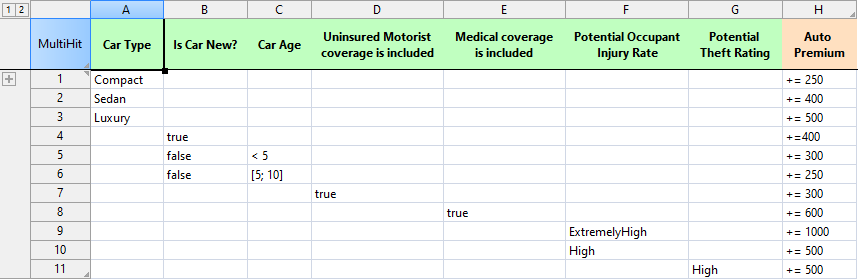


Decision Tables
Model Decision Logic: Multiple Techniques in Modeling Decision Logic
Decision Tables are a powerful declarative method of modeling decision logic. It enables you to simply import existing Spreadsheet documents (e.g. Microsoft Excel, Google Doc…) and bring them to life!
You simply validate them with synthetic and semantic validation to identify errors, rule overlaps and conflicts at design time. They support standard and custom aggregation functions.
Web Components
Integrate Rule Editor into Your Web Application
Our Business Rules Engine provides web components to integrate the authoring experience of business rules into your web application.
Web Components in JavaScript enables authoring (i.e. create new, change, update, etc.) of business rules in a Decision Table or Natural Language within any web technologies such as REACT, vanilla JS and etc.
These web components are built to give your application flexibility of exposing the rules editor to your end user without the need to force your clients leave your application.



Execution Simulation
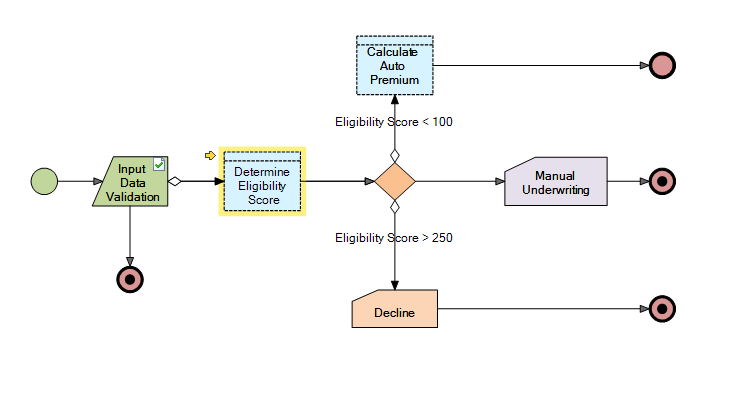
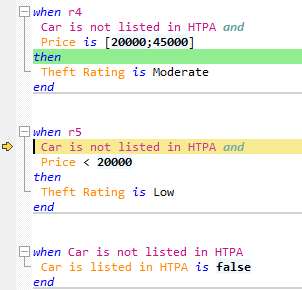
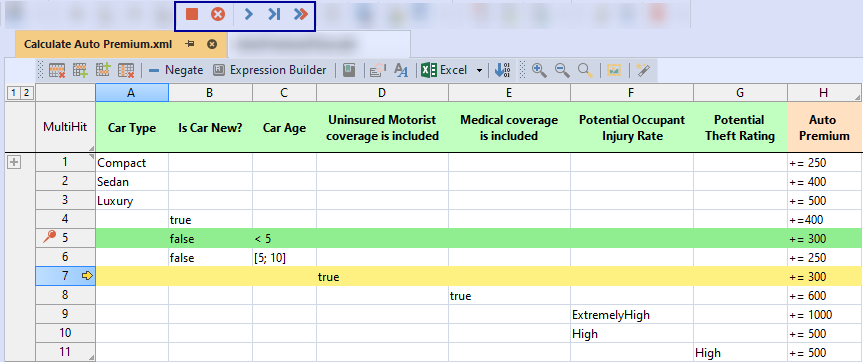
Simulate and Run: Run and Debug Business rules
Use the advanced Business Rules platform to run business rules with live debugging capability allowing you drilldown step-by-step into more detail to visually debug and simulate all types of business rules, calculations and logic.
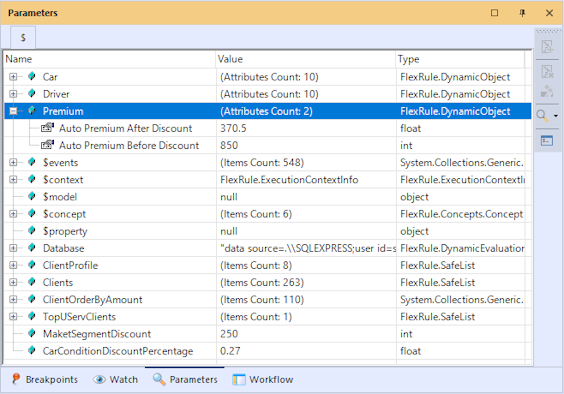
Monitor the execution context and values by simply checking the effect of a business rule execution on your data or running what-if scenarios.
Use multilingual notification messages to make sure they are formatted in the correct language for the end-user.
Quality Assurance
Test and Validate Business Rules: Build and Execute Test Models for Business Logic
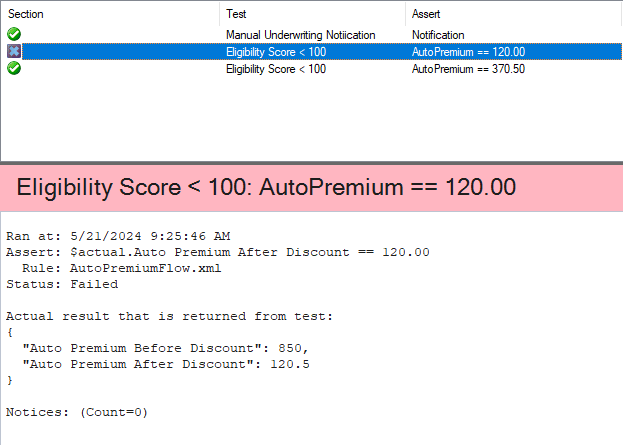
Model your test scenarios, test cases and expectations. Group them in different categories. There is no need for coding to build tests. Just drag-and-drop and assert expectations.
Execute tests to make sure your changes have not broken anything. The testing suite explains reasons for failure and success of your tests. With a single click, you can also test for conflicting and overlapping rules.
Adapt to changes with confidence. You don't need to test your entire application to ensure the quality of your business and rules logic.

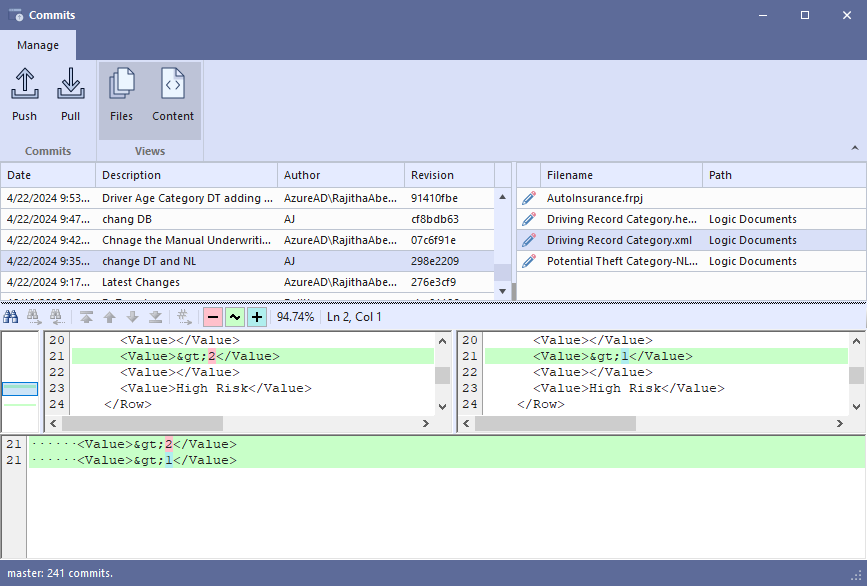
Version and Change Management
Maintain Change History and Run Multiple Versions
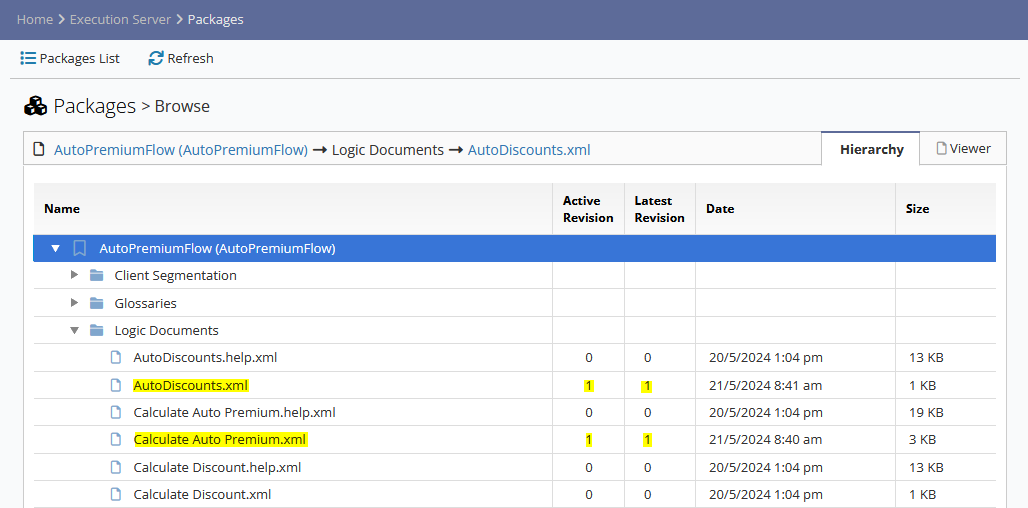
Versioning is not a trivial task when it comes to business rules. Our Business Rule Management System enables you to record and track changes to business rules seamlessly. While modeling, our version control system allows you to keep track of all changes without even having to think about it.
In Production, Staging, Testing and other environments, you can run multiple versions of your business rules simultaneously. Switch to a different version of your services and pin a specific version down for different environments (e.g. production, staging, or testing).
Manage your environment and promote business rules into different environments with a just single click.
Composite AI model for
Decision Intelligence