Continuous Decision Model (CDM)
Continuum of Decision-Making. When decisions aren’t one-and-done.
Adaptive, connected and optimized in real time.

The only model that
Learns, Adapts and Handles Uncertainties
Why Continuous Decision Model is Different?
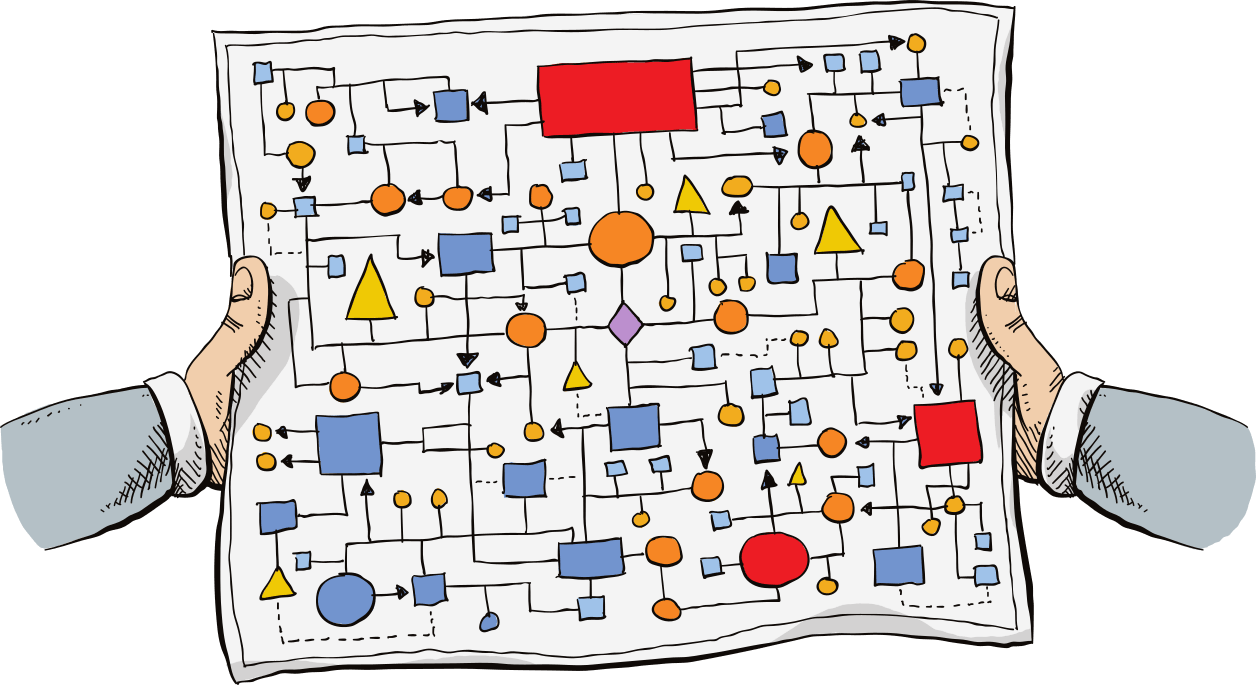
Not a Process or Workflow
- Process is built on predefined, prescriptive steps
- Process requires all possible next steps to be predefined
CMD enables real-time journeys driven by signals and capturing feedback while resolving competing priorities automatically.
Not a Case Management
- Stages and sentries are predefined
- Relies on ad hoc human intervention for case actions
CMD enables adaptive, event-driven, series of decisions that optimize short- and long-term outcomes without manual intervention.
What Can CDM Help You With?
Customer Journey Modeling & Execution
Adapt journeys in real time based on customer signals.
Respond in real time to customer signals. CDM adapts the journey with the best decision at every stage while keeping it customer centric instead of product push or funnel centric.
Next Best Action (NBA)
Decide the best action at any touchpoint across channels.
Determine the best action at any touchpoint across channels in real time such as an offer, message, treatment, proposition, or conversion. CDM adapts to the customer’s context and evolving situation instead of forcing static campaigns.
AI Agent Orchestration
Coordinate agents and bots through event-driven decisions.
Orchestrate AI agents, bots, and systems in an event-driven way. CDM ensures every agent responds to signals in context and contributes toward shared goals instead of following fixed scripts.
Adaptive Case Handling
Progress cases through the best decisions as context evolves.
Drive progression through the best decision on the case rather than reacting to isolated events or actions. Let decisions determine the next possible steps based on the specifics of the subject and context as they evolve over time.
Event-Driven Decisioning
Turn event signals into context-aware decisions.
Trigger and re-evaluate decisions based on sequences of events that derive meaningful signals not control flow. CDM ensures every signal is assessed in context so the right decisioning techniques deliver the best outcome at any stage.
Autonomous Process Interventions
Detect, decide, and act automatically under uncertainty.
Detect conditions, decide the best response, and act automatically with decisions that can deal with uncertainty. CDM intervenes as situations change to keep execution aligned with desired outcomes.
Hyper Personalization
Continuously tailor engagement timing, channel, and experience.
Continuously adapt the customer engagement journey to the individual. CDM personalizes not only the next action but also the timing, channel, and experience so every interaction feels relevant in the customer’s evolving context.
Goal-Seeking Progression
Advance toward goals by adapting decisions as situations change.
Advance toward defined goals by adapting decisions as situations and circumstances evolve. CDM does not follow fixed paths but continuously adjusts actions and transitions to stay aligned with outcomes driven by goals.
Continuous Decision Model Anatomy
Architecture, Design and Components
Signals
Event-Driven by Stage, Not Order
Unlike workflows that follow sequence or case management models that rely on human-driven sentries, CDM activates decisions only when meaningful events signal the right stage. Events can be committed to a transition, queried for available options, or ignored if redundant.
Value:
Agility: react only to signals that matter and ignore noise.
Benefits:
- Prevents wasted transitions and noise sensitivity
- Keeps models lean and responsive
- Supports real-time responsiveness
Features:
- Stage-bound event listeners (not tied to task order)
- Runtime evaluation of entry/exit guards
- Commit/query/ignore behavior for signals
- Out-of-the-box event idempotency to prevent duplicate processing
- Event prioritization to resolve conflicting signals
Decisions
Best Decision Determines the Next Transition
Workflows prescribe the next step and case management relies on human-specified transitions. CDM evaluates composite AI models: rules, data, ML, optimization, and computation to determine the next progression. Transitions are arbitrated and ranked dynamically using live feedback and reinforcement learning.
Value:
Optimization: ensures every move is the best possible for the context and goal.
Benefits:
- Selects transitions dynamically rather than prescriptively
- Leverages hybrid AI and logic sources
- Continuously improves based on live feedback
Features:
- Guard conditions evaluated against live data and context
- Integration of rules engines, ML predictors, optimization solvers
- Arbitration engine ranks competing transition outcomes
- RL agents adjust ranking weights dynamically from outcomes
- Transition commitment occurs only after arbitration selects the best path
Feedback
Closing the Feedback Loop
Workflows and case management end at completion. CDM records outcomes, metrics, and rewards and feeds them back into the model to adapt future behavior. Feedback adjusts weights, preferences, and arbitration rules over time.
Value:
Learning: the system improves continuously with every outcome.
Benefits:
- Refines decision quality on each cycle
- Adapts to real-world results
- Enables reinforcement and bandit learning
Features:
- Outcome capture and persistence with traceability
- Reward/penalty scoring integrated with transitions
- Feedback signals linked to state and context
- Reinforcement learning and bandit trainer integration
- Feedback directly influences arbitration weights
Continuity
Continuous Decision Execution and Learning
Workflows reset on each run and case management closes after resolution. CDM decisions persist and evolve continuously across non-linear, long-running journeys.
Value:
Resilience: decisions remain effective as situations, conditions, and goals evolve.
Benefits:
- Models complex, non-linear long-running and stateful journeys
- Adapts dynamically as objectives shift
- Avoids rigid reset-and-restart cycles
Features:
- Persistent state tracking across lifecycle
- Stage reactivation without restarting flows
- Temporal logic: timeouts, expiry, delays
- Runtime adjustment of transitions as conditions evolve
- Evolving reward functions support long-running journeys
Actors
Multi-Actor Input and Awareness
Workflows assume human tasks and case management is based on case and human centric. CDM treats humans, systems, bots, and AI agents as equal actors that influence decision outcomes.
Value:
Inclusivity: decisions reflect all contributors for accuracy and explainability.
Benefits:
- Combines human oversight with automation
- Improves trust and transparency
- Enhances accuracy through diverse inputs
Features:
- Actor input capture with binding to decision context
- Schema for multi-source inputs (human, system, bot, AI)
- Input weighting and prioritization in arbitration
- Actor traceability for governance and audit
- Support for consensus or override models
Uncertainties
Declarative Boundary Handling
Workflows manage exceptions procedurally and case management has limited sentry-based triggers. CDM introduces declarative boundary sections that manage exceptions, interruptions, retries, and overrides independently from main logic.
Value:
Robustness: ensures reliable, governable, and reusable decision lifecycles.
Benefits:
- Cleaner separation of main logic vs exception handling
- Improves resilience against uncertainty and runtime issues
- Simplifies governance and reuse
Features:
- Declarative boundary sections attached to stages or transitions
- Built-in handlers for retries, timeouts, overrides, escalation
- Reusable boundary fragments across models
- Event-driven overrides redirect flow without polluting core decision logic
- Boundary behavior is observable and auditable at runtime
Composite AI model for
Decision Intelligence


INDUSTRIES
Who we help