🚩 Don't confuse Rules with Adaptive models.
🔹Rules encode what you know.
🔹Adaptive Decision Optimization discovers what works.
Both are decision logic. But they answer different questions.
A rule says: given these conditions, take this action. It reflects the knowledge of the person who wrote it, at the time they wrote it. It is deterministic, auditable, and immediate. It does not change unless a human changes it.
Adaptive Decision Optimization says: given this context, learn which action produces the best outcome. It does not require the answer to be known upfront. It explores, observes feedback, and adapts. Over time it converges on what actually works, not just what was assumed to work or used to work based on historical data training.
Three things no other logic can do:
⭕ Relevance: Select the best action for the current situation when multiple competing options exist, and the right choice depends on the context that shifts.
⭕ Drift. Adjust when the world moves. Rules stay fixed until a human intervenes. Adaptive Decision Optimization recalibrates continuously as outcomes change.
⭕ Uncertainty. Operate when the best answer is not knowable in advance. Rules can define guardrails. They cannot fill the space inside those guardrails when the answer has to be discovered.
This is not a competition between rules, ML, and LLMs with Adaptive Decision Optimization.
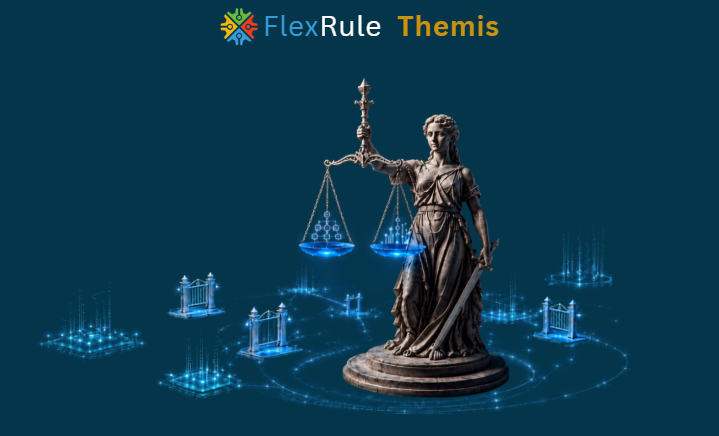
In a governed and explicit decision model, they work together. Rules define what is allowed, what is required, and what is prohibited. Adaptive Decision Optimization optimizes within that boundary.
Read more at https://lnkd.in/gBbPfXMV
–
Follow the “Uncle of DI” if you're looking for unfiltered insights into #DecisionIntelligence, #AI, and #DecisionAutomation. Hit the 🔔 on my profile to get notified about my daily posts.
Posted here.
Published June 19th, 2026 at 07:30 am