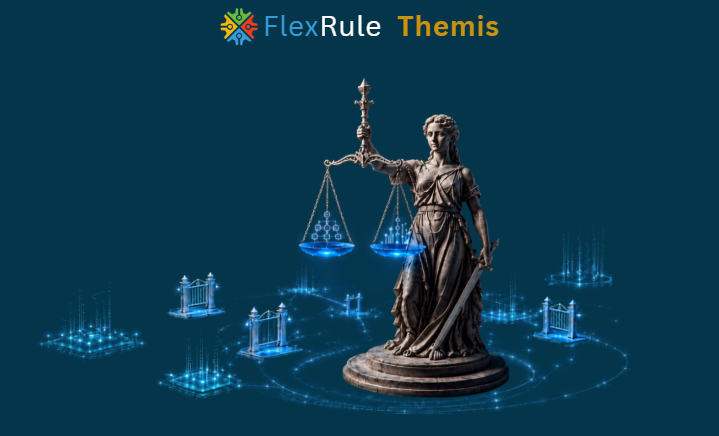
Operationalizing decision governance is not a PDF or a PowerPoint deck; nor is it process automation or workflow. It is an architectural requirement.
When decisions are treated as organizational assets, they must be governed across every pillar. All the related dependencies and their artifacts within their lifecycle must be managed and controlled in a Decision Asset Management like precious assets upon which your organization's survival depends. In modern enterprises, decisions are no longer isolated events; they are executed continuously within a Multi-Actor Environment comprising:
- Humans and Workflow Systems
- Rules Engines and Optimization Systems
- Machine Learning Models, LLMs, and Autonomous AI Agents
In this ecosystem, governance must be operational. It must be designed into the assets, engineered into the execution infrastructure, and enforced in operations. The question is not whether governance matters: what does a decision-centric governance operationalization looks like across this complex multi-actor ecosystem.
Design Governance Pillar: Alignment and Clarity
This pillar of Decision Governance ensures intent, and clarity of decisions are not compromised across the full decision lifecycle. Decision governance begins with design. Before a decision can be automated or trusted, it must be explicitly framed and modelled.
The Design Governance starts by defining the strategic decisions' intent. It uses Decision Frame to clearly specify what are the priorities, and strategic directions of the company. Then it specifies the strategic decisions and their influences and how they are supported with a set of initiatives. Every stage of design governance puts foundation for the next two pillars to follow.
- What decision is being made?
- Why does it matter to the business?
- Who owns the logic and the outcome?
- What influences the strategic decisions and directions?
Decision Model and Notation (DMN) Decision requirements and their logic cannot be buried in code or hidden in “black box” prompts. DMN provides a standard that makes decision requirements and their logic visible, reviewable, and auditable. In multi-actor environments, explicit DMN models ensure that a decision remains consistent whether it is executed by a human or an AI agent.
In the design pillar the Decision Requirements Diagram (DRD is a component of DMN) ensures the requirements of a decision itself is explicitly specified. This ensures clarity for the stakeholders on what the decision is and how we go about it. An alternative for a DRD is a Dynamic Decision Graph which represents situation-aware decision requirements.
Continuous Decision Model (CDM) Decisions are not static snapshots; they exist in a continuum where they influence each other and downstream operations. CDM governs actions driven by decisions, their influence and causal relationships. This is essential for maintaining a “golden thread” of decisions across sequences, interactions, and feedback loops over time. Therefore, it is part of the Design Governance to ensure the intent will be intact and all stakeholders are clear about the downstream impact of decisions and how they change behaviours operations by providing viable actions.
- When is a decision triggered?
- How does it influence other decisions
- What actions will it produce?
- How will the downstream operation change?
These explicit models in the Design Governance ensure alignment so that what they are set to achieve is understood by all involved owners and stakeholders, which is the definition of clarity.
Book a Custom Demo
Engineering Governance: Coherence and Modularity
Design is only the blueprint. Governance becomes “real” when it is engineered into the execution layer. Engineering Governance closes the gap between design and operations governance by providing the building blocks for composition and execution of decisions.
Live Context
Any decision requires context. Either AI agents, rules, or optimization require the ability to query data, look at history, find relevant insights, and explore systems of record but not freely. In a controlled and governed manner but flexible and dynamic enough to avoid rigidity and rework in a reusable manner in real time.
Live Context ensures that every actor (AI, humans and systems) operates on decision-ready context that enables them to query what they require based on a defined semantic layer in real time. Governed context means:
- A collection of query able and hierarchical of decision-ready data available to the actor.
- Data semantics are consistent across actors.
- Inputs are controlled and traceable.
- Execution operates within hard-coded safety boundaries.
Continuous Decision Model
With the appetite of organizations toward the autonomous actors the risk of deviation from the intent is becoming significant. To address autonomy’s risks, we cannot to prescribe how the work should be done but outcome and guardrails must be in place at each stage of the work.
More importantly since in an enterprise there are diverse ranges of actors (i.e, AU, Humans and Systems) the Multi-Actor Hand-off creates the greatest risk in modern automation without governance in place. The knowledge gap between actors, and what is expected of each actor specifically the hand-off between non-deterministic AI (LLMs), deterministic algorithms (Rules Engines) and Systems (automated workflows) creates a high risk of inconsistency in operations.
This knowledge gap, these guardrails and expectations for the outcome cannot be solved in isolation and should be addressed in the end-to-end continuum of decisions that allows multi-actor enterprises work to make and execute decisions within their own boundaries with a clear expectation of quality and shared domain knowledge.
This is enabled by the Continuous Decision Model (CDM) that engineering can set to fire at different touchpoints, channels, customer engagement and stages of the supply chain.
More importantly, the Continuous Decision Model enables capturing the feedback and adjusting decisions and learning on the new situations, so decisions do not drift and customers do not face the disconnected decision experience.
- The Continuous Decision Model (CDM) activates stages, executes decision models and handles hand-offs.
- The LLM can solve and make decisions based on intent guarded by explicit decision models
- The business rules and policies validate outcomes ensuring compliance and quality.
- CMD collects feedback, ensures optimized decisions and alignment with overall objectives of the continuum.
Reusable Decision Module
Engineering Governance produces a standard set of libraries, decision modules and reusable contexts that are approved for various scenarios. This ensures consistency and governance are baked in at early stages across various use cases rather than they become afterthoughts.
By setting up the continuum of decision-making, feedback loops, adaptive learning for optimizing decisions, activating stages and a library of reusable modules and contexts the DecisionOps team is set for success.
Operations Governance: Agility and Compliance
Operational governance ensures decisions are composed and operationalized to match the pace of business but also, remain controlled, explainable, and defensible after they go live. DecisionOps is the core of this pillar “composing” decision-making scenarios without compromising the compliance or the pace of deliver.
The Operations Governance highlights the transition from a technical setup to a business-led execution model where safety and agility coexist.
Dynamic Decision Graph (DDG) and DecisionLang
Static logic isn't enough for complex environments. Dynamic Decision Graphs and DecisionLang enable “Composite AI”, which is the ability to compose rules, integrate ML, optimization and calculations into a single, cohesive decision model. This allows the system to adapt to environment signals while remaining within the governed and controlled structure.
With the power of situation-aware decisions in the Dynamic Decision Graph and a unified decision language (DecisionLang) for non-technical and technical users the DecisionOps can bring to life the decision requirements that are aligned with intent (from Design) and are consistent (from reusable modules and contexts of Engineering) and delivering value without the need of an army.
Simulation and Operationalization
Governance requires “Flight Simulation.” Before a decision impacts a customer, it must be tested against:
- Edge Cases: What happens when data is missing?
- Actor Collision: What if the AI agent disagrees with the legacy rule?
- Impact Analysis: How will this change affect the bottom line?
Monitoring and Forensics Operational governance is not a dashboard of outcomes; it is accountability for execution. Monitoring must provide a forensic trail:
- What was decided?
- Which actor (Human, AI, or Rule) made the call?
- Under what specific context (Live Context)?
- Why was it justified (DMN/DDG)?
Adaptive Control
Decisions cannot be just rolled out blindly. The DecisionOps team requires the ability to securely, safely and gradually roll out decisions across different sets of users, segments and geographical locations for different use cases. This is when Adaptive Control in the hands of DecisionOps makes all the difference.
As they selectively roll out new versions of decisions toa subset of users, they can measure the impact and performance with real user interaction, learn and adjust until they are comfortable rolling them out to a wider user group at the right pace.
The best part is that because compliance is not an afterthought and is instead part of the explicit decision model, Live Context provides fine-grained traces down to what data was used under the stages that the CDM activated, while DMN provides clarity and transparency. Everything is compliant and delivered with full control without compromising the business agility or engineering team bottlenecks.
Final thoughts
If you want intelligent business capability without catastrophic risk in a multi-actor ecosystem of systems, AIs and humans, decisions must be treated as first-class organizational assets where governance is no longer a “check-the-box” activity: it is the structural integrity of the enterprise continuum of decision-making.
To be truly operational, every decision pillar must pass the Quick ACT™ test:
- Quick: Can we adapt the logic and deploy without friction?
- Accurate: Are outcomes grounded in reality, or are they guesswork?
- Consistent: Is the result the same across every channel and situation?
- Transparent: Is the result understood, explainable, and defensible?
- Actionable (ACT): Does the decision result in a controlled, measurable action?
If something has the power to decide, it must have the obligation to be governed.
Read More
Last updated March 20th, 2026 at 11:58 am Published February 10th, 2026 at 10:59 am