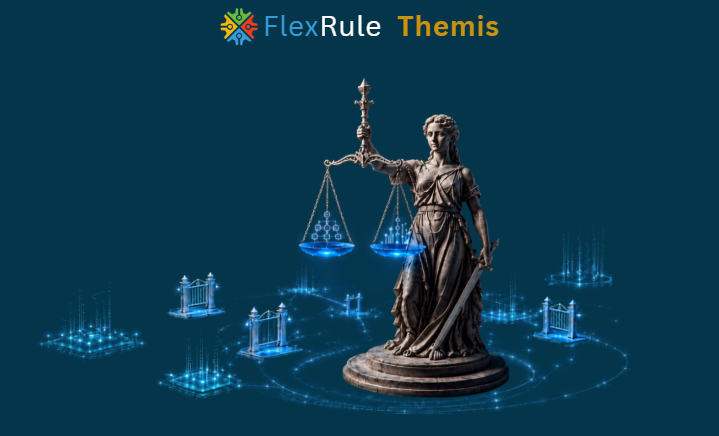
Decision governance involves setting up processes, frameworks, guidelines, roles and responsibilities to ensure that decisions are made consistently, transparently, and in alignment with the organization's goals and meet regulatory requirements.
As organizations face increasing complexity from evolving regulations to AI-assisted automation and high-velocity operations the need for decision governance is growing rapidly. Without it, businesses in regulated environment such as banking, financial services, insurance and etc. risk making opaque, inconsistent, or non-compliant decisions that undermine trust, agility, and performance.
This challenge is not only related to regulated environment but also, all businesses that their decisions outcome influences or impacts human's livelihood, health, financial stability and etc.
The decision governance ensures consistency and accountability by providing a clear framework and set of guidelines that everyone has to follow.
It also includes the audit processes to ensure a layer of oversight and accountability. During an audit phase, the auditors will review the process and workflows, decision outcomes, the criteria used, and the documentation to ensure everything is in line with the established governance framework.
Decision governance is an accountability framework to advance decision making for ethical, transparent, repeatable, and outcome-aligned decisions.
Decision Governance Key Stages
Implementing decision governance begins with defining clear objectives that organization want to achieve such as transparency, consistency, compliance, and alignment with strategic goals. Then a governance council is established to oversee the efforts.
The governance framework is then developed to specify what decisions are critical, what inputs are required, and how data is validated to ensure trust. A key aspect of this stage is ensuring that inputs are accurate, outcomes are unbiased, and ensuring decisions are fair, explainable, and free from unintended discrimination.
Afterward, tools and technologies are deployed to support decision modeling, execution, traceability, and auditability ensuring they are aligned with the governance program.
Throughout the lifecycle of the program, decisions are continuously monitored and refined to maintain data integrity, detect bias and drifts, enforce governance rules, and adapt to evolving business and regulatory demands.
There are several key stages in Decision Governance implementation:
- Define Objectives Clarify goals such as transparency, consistency, compliance, and alignment with strategy.
- Establish Governance Council Form a cross-functional group to oversee decision governance practices.
- Roles and Responsibilities Define clear ownership for decision. Assign stewards, approvers, and operational owners to ensure accountability and enforce governance at every stage.
- Develop Framework Create policies, standards, and procedures for how decisions are made, approved, and recorded.
- Operationalize Implement tools and platforms to support modeling, execution, and traceability.
- Monitor and Improve Continuously audit decision activities and refine governance based on outcomes and feedback.
Core Program Objectives
Each organization may have their own set of objectives they want to achieve from the program. The objectives of the Decision Governance for the organizations are the determining factor, but for most of the regulated operating environment especially in finance, banking, insurance, government, health and etc. the below objectives are a good start:
- Unbiased processes: Ensure that decision-making mechanisms do not introduce or propagate unfair bias. This includes statistical, algorithmic, or human bias. Decision Governance enforces practices such as input validation, fairness reviews, and traceable logic to promote ethical and equitable outcomes.
- Consistency of outcomes: Ensure that decisions under similar conditions produce consistent results. This applies regardless of when, where, or by whom the decisions are made. It reduces risk, enhances trust, and aligns business operations with predictable rules and logic.
- Reducing variations in results (noise reduction): Minimize variability caused by subjective interpretations, unclear rules, or disconnected logic. Reducing noise leads to better control over quality, improved customer experience, and stronger alignment with defined standards and business policies.
- Compliance with regulations: Ensure that every decision meets the legal and regulatory obligations that apply to the organization. This includes financial compliance, data privacy, anti-discrimination laws, or sector-specific mandates. Governance ensures that decision logic is aligned with enforceable requirements and that compliance is provable.
- Increase of productivity: Ensure that build, maintain and operationalization of decisions can be done in a very efficient manner and does not require IT and software development all the time. However, governance keeps low-code, no-code and vibe approach under control by to not compromising the other objectives and follow proper standards like DMN and DecisionLang for ensuring productivity.
The specific focus of each may vary based on industry, risk profile, or operational scale, but in regulated environments such as finance, banking, insurance, government, and healthcare, there is a recurring set of foundational objectives that serve as a reliable baseline. These objectives ensure that decisions made within the organization are not only operationally sound but also compliant, fair, and defensible.
Practical Approach
To ensure these objectives are met in a Decision Governance program, you must first understand which characteristics of decisions influence their conformance. If you only focus on the productivity angle, you end up with decisions configured in a fancy UI and trapped inside it. Or worse, scattered across process models, SQL statements, code, or hidden in data. Decisions must be defined explicitly in a human readable form and a machine executable shape at the same time, with as few transformation layers as possible between definition and execution. This keeps decisions clear, consistent, governable, and ready to run.
Clarity
This is a critical factor in ensuing separation of “what” from “how” of decisions. If you don't know the “how” of decisions it becomes impossible to understand what the impacts of the governance program are and where they come into play. It ensures cross team understanding of what a decision is about and how organization should go about it.
Example:
If a bank approves or declines loan applications, clarity means being able to clearly describe what inputs (such as credit score, income, or existing debt) are used, how those inputs interact with business rules, and how the final decision is made. This must happen without ambiguity or reliance on undocumented logic.
Transparency
Another key characteristic is to ensure the decisions outcomes are explainable, traceable, and auditable. This ensure, you can track the results of an individual subject and why a specific outcome is achieved based on a set of decisions.
Transparency needs to go beyond the tradition rule explanation. It needs to go back to the origination of the inputs, back to the source of the authoritative system and shows what inputs are used, how the inputs are transformed, what insights are generated and consumed in the decision execution.
Example:
In a healthcare claims process, transparency would allow the organization to explain why a claim was rejected by tracing the source data (such as procedure codes), showing which rules triggered (such as policy exclusions), and identifying which insights influenced the outcome (such as fraud risk indicators).
Measurability
Decisions that are executed should have the associated metrics that support the KPIs of the governance program in place. These metrics are based on the procedures, and frameworks to ensure the monitoring of objectives such as quality, bias, noise etc. is possible.
When these metrics are overlayed on inputs used, rules executed, algorithm interpretations, it will roll up to the KPIs on how the current implementation of decisions, rules and algorithm in place are aligned with program expectations.
Example:
In a policy eligibility decision, the insurer tracks how often the decision result is “inconclusive” due to missing or invalid inputs. This rate becomes a KPI indicating input data quality and decision completeness under governance oversight.
Aligning with Decision Governance
The key to alignment with the decision governance is ensuring frameworks are followed, procedures and rules are enforced in an explainable, clear and transparent manner.
Now that is clear what aspects of decision will determine whether or not your decisions are aligned with Decision Governance program, let's talk about how to ensure those are not compromised.
Organizations implement and enforce decisions in different ways. Decisions may be embedded into processes and systems, automated through workflows, or applied manually using spreadsheets and policy documents. Regardless of the method, it is essential to ensure that all decisions adhere to the defined policies and governance framework.
There are several considerations that can help simplify this alignment. Since decision-makers are ultimately accountable for the decisions they execute, alignment with the governance program is not optional. It is central to its purpose.
There are two important enablers of the alignment with Decision governance
- Using proper notation and language to document and execute decisions: Decision Model and Notation with Conformance Level 3
- Ensuring semantic integrity and trust in data
Decision Model and Notation with Conformance Level 3
It is essential to recognize that decisions are not the same as code, processes, or workflows, or UI (low-code, no-code) configuration. This distinction plays a critical role in aligning with any Decision Governance program. Once this understanding is established, the value of separating decisions from systems and workflows becomes clear. It reinforces alignment by allowing decisions to be governed, managed, and audited independently from the mechanics of execution.
By separating of decisions from processes, codes and UI, using the Decision Model and Notation the platform can guarantee the Clarity. Meaning establishing a common language that business stakeholders can understand how decisions are made in organizations. Additionally, by supporting the Conformance Level 3 of the DMN, it can guarantee the execution of decisions do not need any interpretation, or extra steps to execute them. The models by designed are executable. No loss in translation anymore.
Hence the language of modeling decisions is understandable by all stakeholders, everyone in the governance program and related teams understand how the guidelines and policies impact the organizations decisions. Additionally, there is no need for codifying logic e.g. rules and data, ensures execution and enforcement of the policies and guideline are easily applicable on those identified areas.
Best of all, these compliance and regulatory implementations are open and understandable with business and compliance stakeholders with the common language for decision modeling in place. Conformance Level 3 of the DMN guarantees the behavior at Runtime is also aligned with what you see at the screen in analysis and design time.
DecisionLang
While DMN covers core aspect of decisions, but lacks many functionalities around data access, data semantic, logic coherence and complex decision logic such as Constraints Programming, Machine Learning, Adaptive logic. Also, it forces business rules to be done only in Decision Table which not always the best choice for certain scenarios.
More importantly, the component-based approach and composability of the Decision Model and Notation is only around decision logic embedded inside the Decision Requirements Diagram. Which does not enable teams for full potential reusability of decision services.
And this is where DecisionLang comes in play by extending DMN it ensures while what DMN lacks is address but also guarantees clarity and explainability for governance rather than putting everything in UI, code or processes.
Semantic Integrity, Data Clarity and Trust
When a governance program demands that every decision is transparent, explainable, and accountable, a significant part of alignment involves ensuring that inputs are unambiguous, that integrity is enforced, and also both data and insights are trusted.
Ensuring Integrity
Semantic modeling, such as Fact Concept based on the Shared Data Model and Notation™ (SDMN™), ensures the decisions consume the right structures of inputs that can be shared across processes and workflows.
This improves clarity and reduces uncertainty about which inputs should be used to reach an outcome in the decision model. By using this common semantic layer, teams can maintain integrity across decisions within organizations.
Trusting Source
Another important aspect of decision's inputs is where the data is sourced. What authoritative systems and information are used and fed into the decision? How is the source of data transformed, and how are insights produced and contributed to the outcomes?
This traceability of the data to its origin is critical to trust the data and ensure how the outcomes of decisions are produced.
Technology such as LiveContext not only enables the required traceability back to the origin of the data but also enables visible transformation and insight creation. This allows the used data and insights to be linked back to its exact origin, and to how it has been transformed. This visibility and transparency is enforced by declarative intent, not complex SQL or code queries, so it is understandable to all business stakeholders.
Book a Custom Demo
Final Thoughts
Decision governance is no longer optional. As decisions increasingly drive automation and customer outcomes, ensuring they are explainable, auditable, and based on trusted, structured inputs is critical to meeting the common objectives of a governance program in regulated environments.
By anchoring governance implementation around DecisionLang (the superset of DMN Conformance Level 3 and SDMN) guarantee transparent execution, clarity of definition and clear separation between “what” and “how” of decisions. This enables organizations to embed governance guidelines and frameworks into the fabric of decision-making.
That's how governance program becomes operational — not just documented.
Read More
Last updated May 19th, 2026 at 02:46 pm Published June 23rd, 2025 at 02:46 pm