The every-in-satisfies logic in DMN is a fundamental part of working with data. It goes through every item of a list, and returns a Boolean value (true or false) if all items meet a certain condition. To use every-in-satisfies as a FEEL expression, see the section of the Resource Hub article on FEEL expressions: every-in-satisfies at here. A boxed expression implements this logic using a boxed iterator. For more information on creating boxed expressions, see the FlexRule Resource Hub article: Creating Boxed Expressions
A Boxed Iterator offers a straightforward visual format for defining every-in-satisfies logic.
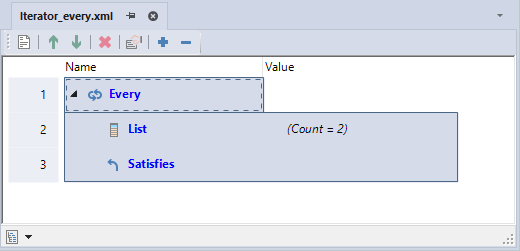
Add to a Boxed Expression
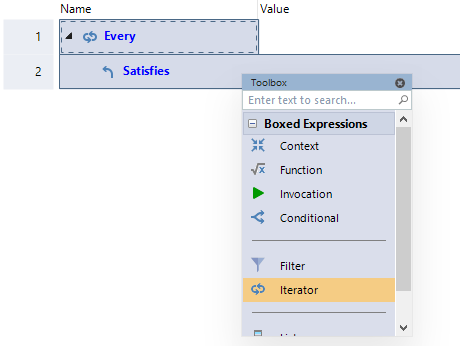
In a boxed expression document, drag an Iterator boxed expression from the Toolbox and drop it onto the root node.
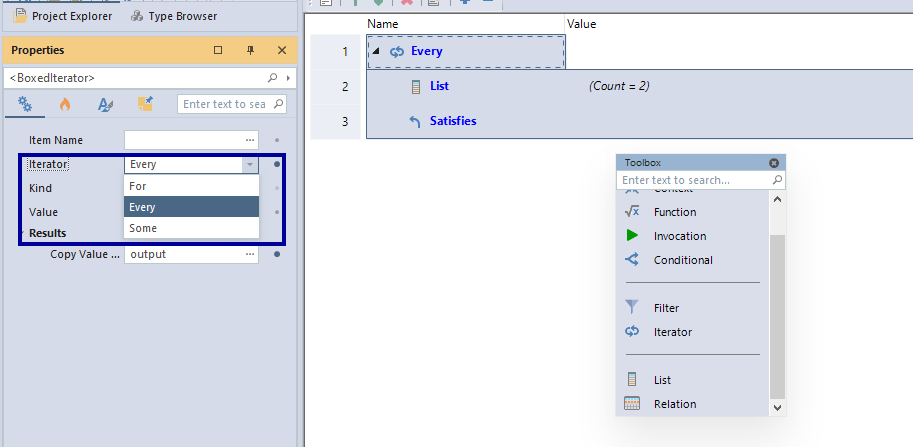
Set the iterator type as every and set an item name for each item in the input in the parameters window.
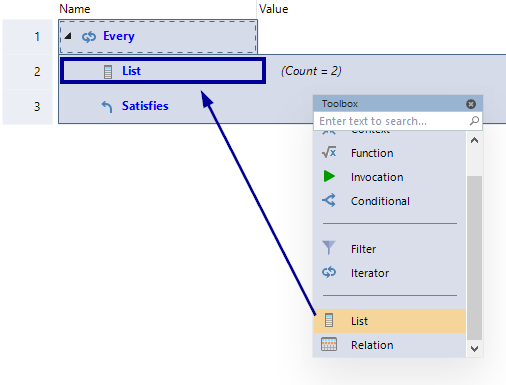
Set the input by writing any expression or input name in the value box. You can also drag and drop a boxed list to the root node. Alternatively, create an input in the Variables Definition window and reference its name in the value box. For information on boxed lists view: Boxed Lists.
Set an expression for the return value using the item name.
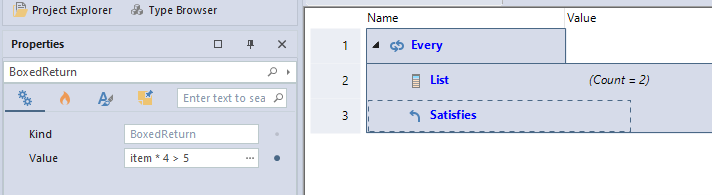
Add the Boxed Iterator to a DRD
You can use the boxed expression in a Decision Requirement Diagram (DRD) by dragging and dropping it onto a Business Knowledge Model (BKM) node. This action links the node directly to the boxed expression.
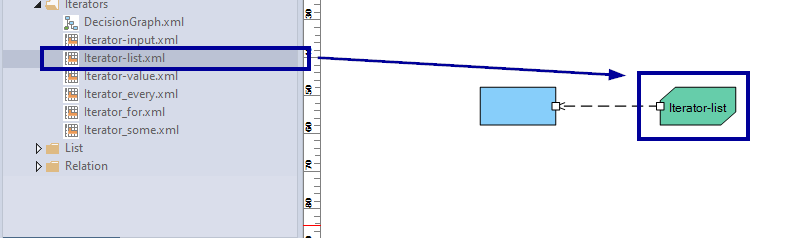
Give the business knowledge node a name and reference that name in the associated decision. Add empty parenthesis after the name if there are no input variables.

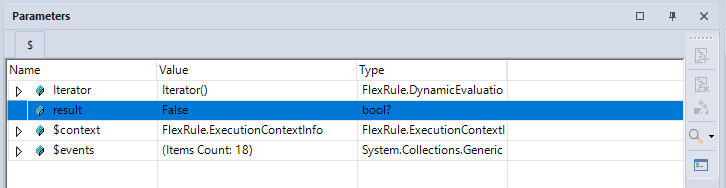
Once you run the project, view the parameters window and you can see that the iterator was saved to the output variable.
For more information on this see the FlexRule Resource Hub article on the Decision Requirements Diagram.
Summary of every-in-satisfies Logic in DMN
every-in-satisfies logic in DMN is implemented using a boxed iterator. A boxed iterator provides a clear visual format within a boxed expression document. You can drag it in, set the output parameter, and define the for, in, and return parts. The expression can be added to a Decision Requirement Diagram via a business knowledge node, with results viewable after running the project.